What Kate Did (S0209)
Airdate: 30 November 2005
Written by: Steven Maeda
Directed by: Craig Wright
Running Time: 46 minutes
By the midpoint of its second season, Lost had firmly established a pattern where episodes centring on particular characters were often elevated above the standard instalments, offering deeper mythology and more compelling drama. Foremost among these was Kate Austen, whose pre-Island fugitive life, though grounded in a recognisable reality, proved paradoxically more colourful and driven by clearer motivations than many of her fellow survivors'. After the very good Tabula Rasa and Born to Run, the third Kate-centric episode, pointedly titled What Kate Did', finally delivers the long-promised origin story. Written by Steven Maeda and Craig Wright and directed by Paul Edwards, this episode is a masterful character study that, while occasionally burdened by obligatory island business, brilliantly dissects the primal crime that defines Kate, painting a portrait of profound moral ambiguity.
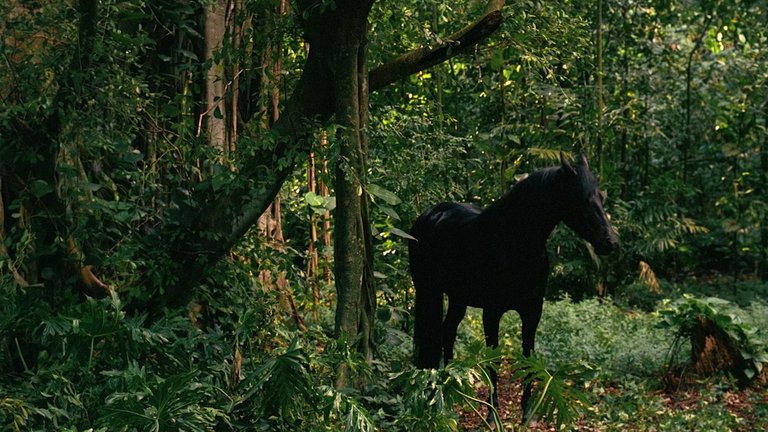
As with 'Born to Run', the flashback narrative proves far more engrossing than the concurrent Island events, despite its grim, domestic premise. We see Kate not as a hardened criminal, but as a bright, resourceful young woman executing a long-gestating plan to end her mother's suffering. The target is her drunken, abusive stepfather, Wayne Janssen (James Horan). In a chillingly methodical sequence, she tucks him into bed before ensuring the house will explode, hoping the authorities will blame a gas leak. Her motive is layered: it's an act of vengeful protection for her mother Diane (Beth Broderick), and a financial scheme with Diane as the insurance beneficiary. The plan’s failure—her swift capture by a relentless U.S. Marshal (Fredric Lane)—leads to a pivotal rainy-night car journey. The appearance of a mysterious black horse causes a crash, allowing Kate to escape, a moment of island-like surrealism intruding upon her past. The episode's core, however, is her subsequent meeting with her estranged father, U.S. Army Sergeant Sam Austen (Lindsey Ginter). In a superbly acted scene, she reveals her discovery that Wayne was her biological father, a truth Sam already knew, but never acted on it. His poignant, devastating rebuke—"I didn't have murder in me"—simultaneously explains the military skill set he inadvertently gave her and highlights the fatal flaw she possesses. He grants her an hour's head start, a moment of tragic paternal love that seals her fate as a perpetual runner.
On the Island, these unresolved ghosts violently intrude upon the present. Entrusted with nursing a feverish Sawyer (Josh Holloway) back from infection, Kate is horrified when he deliriously asks, "Why did you kill me?" Convinced Sawyer is channelling Wayne's spirit, her guilt manifests physically through the reappearance of the spectral black horse. This psychological haunting is deftly intertwined with the simmering love triangle. Sawyer's unconscious confession of love for Kate is overheard by Jack, and in a moment of confused desperation, Kate kisses Jack only to immediately flee. This isn't mere romantic indecision; it's a visceral reaction to seeing her own capacity for darkness reflected in Sawyer. Her care ultimately helps Sawyer recover, and in a beautifully ambiguous closing moment, both witness the black horse, suggesting the island is externalising their shared trauma.
The episode's other significant thread advances the Dharma Initiative mythology within the Swan Station. Locke debriefs Michael and Mr. Eko on the computer and the orientation film. Eko, intriguingly, gives Locke a Bible recovered from the Arrow Station, inside which Locke finds missing frames of the film. The newly edited version features a stern warning from the lead scientist against using the computer to communicate with the outside world—a rule Michael instantly breaks, receiving a message from someone addressing him as "Dad." This subplot is efficiently handled, serving its purpose as plot propulsion but feeling somewhat disconnected from Kate's intense personal drama.
Where 'What Kate Did' truly excels is in its writing. Maeda and Wright fill the narrative gaps with devastating simplicity, revealing that Kate's motives were neither grand nor purely selfish, but tragically human: a desperate attempt to protect a loved one from abuse that spiralled into murder. The episode posits that her true father, Sam Austen, provided the skills for her survival, while Wayne provided the monstrous inheritance that compelled her to use them. Most importantly, it complicates Kate's character beyond a simple fugitive. Her attraction to Sawyer is revealed as a fraught fascination with a man who mirrors her own "badness," a dark reflection she both fears and is drawn to.
The production elevates the material considerably. Michael Giacchino's score, echoing Bernard Herrmann's work on Psycho, masterfully underscores the episode's psychological horror and domestic tension. Evangeline Lilly delivers a career-best performance, portraying Kate's vulnerability, steeliness, and unraveling sanity with raw commitment. She is powerfully supported by Matthew Fox's stoic Jack and Josh Holloway's convincingly debilitated Sawyer, while guest stars Lindsey Ginter and Beth Broderick bring immense pathos to their brief, pivotal roles.
In contrast, the remaining island subplots function as functional, business-like filler. Jin and Sun's reconciliation is sweetly acknowledged, while Sayid, digging Shannon's grave, is a picture of silent grief. Shannon's funeral itself is a simple, unemotional affair, with Sayid overcome, able only to state "I loved her" before walking away. Jack's pragmatic attempt to connect with the guilt-ridden Ana Lucia feels more like obligatory character maintenance than organic drama.
What Kate Did is perhaps the finest Kate-centric episode. It succeeds not through mythological revelation, but through fearless character excavation. It presents a crime without easy justification, a protagonist who is both sympathetic and culpable, and suggests that the island's true mystery is its capacity to make one physically confront the ghosts of their past. While the B-plots are merely adequate, the A-plot is Lost at its most psychologically complex and emotionally resonant.
RATING: 7/10 (+++)
==
Blog in Croatian https://draxblog.com
Blog in English https://draxreview.wordpress.com/
InLeo blog https://inleo.io/@drax.leo
LeoDex: https://leodex.io/?ref=drax
InLeo: https://inleo.io/signup?referral=drax.leo
Hiveonboard: https://hiveonboard.com?ref=drax
Rising Star game: https://www.risingstargame.com?referrer=drax
1Inch: https://1inch.exchange/#/r/0x83823d8CCB74F828148258BB4457642124b1328e
BTC donations: 1EWxiMiP6iiG9rger3NuUSd6HByaxQWafG
ETH donations: 0xB305F144323b99e6f8b1d66f5D7DE78B498C32A7
BCH donations: qpvxw0jax79lhmvlgcldkzpqanf03r9cjv8y6gtmk9