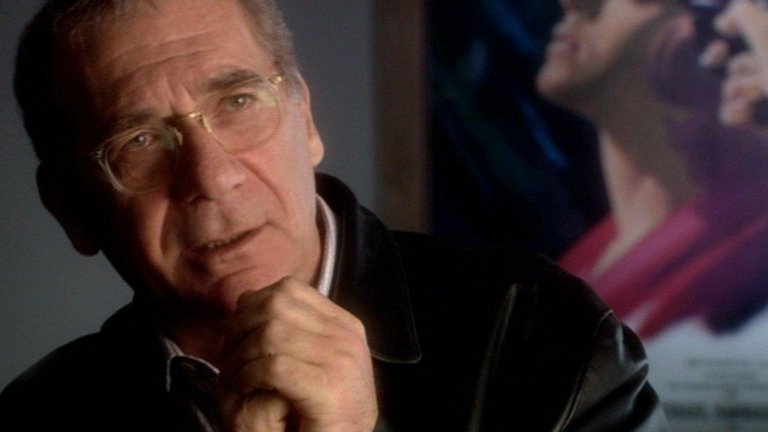
It is a sometimes annoying and sometimes amusing habit of major Hollywood studios to greenlight rival projects based on the same high-concept premise—asteroids hitting Earth, volcanic catastrophes, and multiple dramatisations of the Gunfight at the O.K. Corral. This curiously competitive instinct found a reflection, perhaps unexpectedly, in the snobbish world of arthouse or “independent” cinema at the dawn of 2003. Within months, two high-profile feature documentaries, crafted by hardcore cinephiles for a like-minded audience, chronicled the same seismic shift in American filmmaking: the rise and fall of the New Hollywood of the 1970s. The first was Kenneth Bowser’s Easy Riders, Raging Bulls, a direct adaptation of Peter Biskind’s salacious 1998 bestseller. The second was A Decade Under the Influence, co-directed by the late Ted Demme and Richard LaGravenese. Premiering at the Sundance Film Festival more than a year after Demme’s untimely death, and poignantly dedicated to his memory, this Independent Film Channel production enters the arena with a loftier, more respectful posture than its gossipy counterpart. Yet, for all its good intentions and impressive access, it ultimately succumbs to a different, more insidious flaw: it becomes an uncritical, self-perpetuating monument to its subjects, offering little beyond a well-polished primer for the uninitiated.
The film’s thesis is established with elegant efficiency. Opening with footage from the garish, old-world Hollywood premiere of Hello, Dolly! (1969)—a costly musical fiasco that symbolised a crumbling studio system—it posits that a vacuum of creative leadership was filled by a new generation. These were directors weaned on the alternatives to Classic Hollywood: the gritty independence of John Cassavetes, the pragmatic, convention-free world of Roger Corman’s B-movies, and, most importantly, the electrifying work of European auteurs like Godard, Truffaut, Fellini, Antonioni, and Bergman. From this fertile ground, the documentary argues, sprouted a paradigm shift beginning with Arthur Penn’s Bonnie and Clyde (1967) and crystallised by Dennis Hopper’s Easy Rider (1969). A Decade under the Influence then dutifully catalogues the films that defined this movement, presenting them as both reflections and catalysts of profound cultural change. The anti-establishment rebellion fuelled by Vietnam and Watergate, the Sexual Revolution, and a wholesale rethinking of narrative and moral certainty are all mapped onto the era’s cinema. The film convincingly draws lines between societal upheaval and the bleak, morally complex, and formally adventurous work of directors like Robert Altman, Hal Ashby, and Martin Scorsese.
Where the documentary falters, however, is in its analysis and its scope. Its technique—a standard blend of stock footage, film clips, and talking-head interviews—is competent but uninspired. While it boasts a more celebrated roster of interviewees than Easy Riders, Raging Bulls, featuring heavyweights like Scorsese, Francis Ford Coppola, and Julie Christie, this advantage is largely superficial. It can be attributed to the film’s deliberate avoidance of Biskind’s controversial, ego-bruising gossip. Instead of tough questions, the directors are offered a platform for nostalgia. They indulge in a collective act of myth-making, elegising their own youthful brilliance and the creative freedom of the era. Conspicuously absent is any substantive critique of the movement’s internal flaws. The unchecked ambition, the megalomania, and the managerial incompetence that led to late-1970s commercial disasters on par with Hello, Dolly!—epics like Heaven’s Gate (1980) being the prime example—are glossed over. The film briefly acknowledges the closing of this window with the rise of the blockbuster, mentioning Jaws, Rocky, and Star Wars as populist antidotes to New Hollywood’s bleakness. Yet, it fails to engage with the crucial irony: that the very excesses and financial irresponsibility of the “movie brats” paved the way for the new, risk-averse commercial paradigm ushered in by Steven Spielberg and George Lucas. Tellingly, and quite damningly, neither Lucas nor Spielberg appear in the film, an omission that feels less like an editorial choice and more like a refusal to confront the movement’s true legacy.
This lack of critical depth renders the final product, particularly in its truncated theatrical version, oddly self-congratulatory. For the hardcore cinephile, the documentary offers no revelations. The canon it presents—The Godfather, Taxi Driver, Chinatown, Nashville—is entirely predictable. The interviews merely confirm established historical claims and, more pointedly, reinforce the interviewees’ own perceived role in a heroic narrative. There is no sense of excavation, no attempt to challenge or complicate the well-worn story. It becomes a ceremonial procession of classics, accompanied by the architects reminiscing about how daring they all were. Consequently, A Decade Under the Influence feels less like a documentary and more like a feature-length DVD bonus feature, a collection of audio commentaries stitched together.
As a result, the film’s utility is severely limited. It functions adequately as a basic primer, a neatly packaged two-hour survey for those entirely unfamiliar with this chapter of film history. For this audience, it provides a coherent, if simplistic, chronology and a showcase of seminal clips. However, for anyone with even a passing familiarity with the subject matter, the experience is one of diminishing returns. It offers little original insight, no challenging arguments, and fails to illuminate the darker, more complex undercurrents of the era it purports to celebrate. In the end, A Decade Under the Influence commits the cardinal sin of documentary: it tells its audience nothing they could not have easily learned elsewhere, and does so with a reverence that borders on hagiography. It is a handsome, well-assembled, but ultimately shallow tribute, a cinematic echo chamber that preaches to the converted while offering them no new sermon. In the rivalry of 2003’s duelling New Hollywood documentaries, it wins the battle for prestige access but loses the war for meaningful insight.
RATING: 4/10 (+)
==
Blog in Croatian https://draxblog.com
Blog in English https://draxreview.wordpress.com/
InLeo blog https://inleo.io/@drax.leo
InLeo: https://inleo.io/signup?referral=drax.leo
Leodex: https://leodex.io/?ref=drax
Hiveonboard: https://hiveonboard.com?ref=drax
Rising Star game: https://www.risingstargame.com?referrer=drax
1Inch: https://1inch.exchange/#/r/0x83823d8CCB74F828148258BB4457642124b1328e
BTC donations: 1EWxiMiP6iiG9rger3NuUSd6HByaxQWafG
ETH donations: 0xB305F144323b99e6f8b1d66f5D7DE78B498C32A7
BCH donations: qpvxw0jax79lhmvlgcldkzpqanf03r9cjv8y6gtmk9