Valar Dohaeris (S03E01)
Airdate: 31 March 2013
Written by: David Benioff & D. B. Weiss
Directed by: Daniel Minahan
Running Time: 54 minutes
The third season of Game of Thrones arrived in the spring of 2013 at a moment of profound cultural coronation. No longer merely a successful television adaptation, the series had solidified its status as a global phenomenon. The characters, the dialogue, the iconography—from the direwolf sigil to the phrase "winter is coming"—were being metabolised by the emerging power of internet memes and social media, becoming an essential, shared vocabulary of popular culture. This ascendancy was built on a pattern of exponential growth: if Season 2 represented a quantitative leap in scale and confidence from its foundational first year, then Season 3 promised the same for its predecessor. It telegraphed these ambitions with the confident, expansive stride of its premiere, Valar Dohaeris. New, exotic settings, a host of fresh characters, and a palpable increase in production grandeur all served notice that the show was evolving from a gripping family saga into a fully realised, world-spanning epic.
The title itself, however, represents something of a clever misdirection. A direct callback to the Season 2 finale, Valar Morghulis ("all men must die"), its counterpart 'Valar Dohaeris' ("all men must serve") suggests a thematic pivot from existential threat to dutiful submission. Yet, as scripted by David Benioff and D. B. Weiss, the episode is less about humble service and more about the brutal calculus of survival and the ruthless pursuit of power. This tension is established immediately in one of the series' rare cold opens, picking up precisely where the last season ended. At the Fist of the First Men, a terrified Samwell Tarly is attacked by a wight—a reanimated corpse with chillingly blue eyes—only to be saved at the last moment by Lord Commander Jeor Mormont. Mormont's admonishment is telling; he cares less for Sam's survival than for his failure to send the ravens. His subsequent decision to lead the shattered remnants of the Great Ranging south is framed as a duty: they must warn the realm of the true enemy. Here, 'all men must serve' translates to a grim obligation to a kingdom blissfully ignorant of its own doom.
This theme of performative allegiance and strategic deception is mirrored beyond the Wall. Jon Snow, having infiltrated the wildling host, is brought before their King-Beyond-the-Wall, Mance Rayder (Ciaran Hinds). In a massive camp that introduces the awe-inspiring sight of an actual giant—a seamless CGI creation that makes myth tangible—Jon must sell his desertion. His story, crafted around disgust at the Night's Watch's knowledge of White Walkers and Craster's sacrifices, is a masterful piece of improvisation. He wins over the initially sceptical Mance and his boisterous lieutenant Tormund (Kristofer Hivju). Jon's new wildling cloak is a potent symbol; he must now serve a new master to serve his ultimate cause, embodying the episode's titular phrase through layered deceit.
Meanwhile, in the aftermath of the Battle of the Blackwater, the fortunes of victors are parsed with bitter inequality. In King's Landing, Tyrion Lannister, face scarred and spirit bruised, confronts the true cost of his heroism. His father Tywin's cold, transactional dismissal of his claim to Casterly Rock is a devastating piece of character work, cementing Tyrion's permanent status as the despised outsider within his own family. Contrast this with the rising star of Margaery Tyrell (Natalie Dormer), who delivers one of the season's most intriguing and effective performances. Her strategy is one of soft power. Her relatively revealing gowns, cynically explained away by the warmer climate of the Reach, are a meta-commentary on the show's much-debated 'sexposition,' weaponising the very criticism levied at the series. But her true genius is public relations: visiting the orphaned and maimed in Flea Bottom, she demonstrates that winning hearts and minds can succeed where Joffrey's brute terror fails. She is serving the realm, as it were, to ultimately master its king.
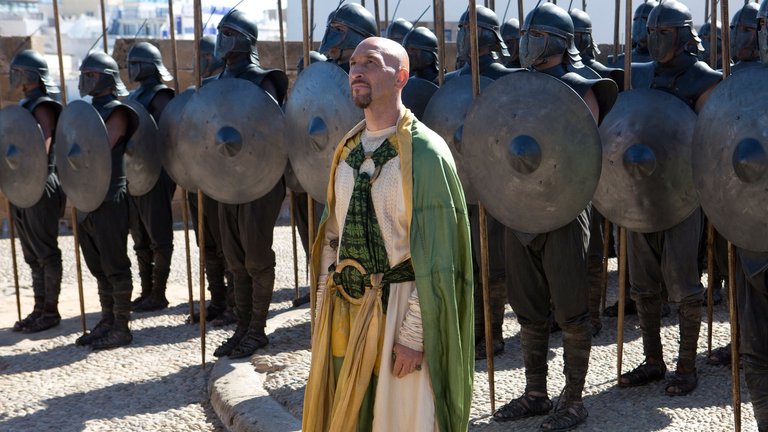
The episode's expanded budget, courtesy of HBO's deepened investment, is most lavishly displayed in its Essosi sequences. The shift to Moroccan locations for Astapor provides a stunning, sun-baked exoticism far removed from the greys of Westeros. Here, the world-building deepens ominously. Westeros, for all its political murder and feudal cruelty, is revealed as almost parochial compared to the grotesque, institutionalised barbarism of Slaver's Bay. Daenerys's quest for an army leads her to the Unsullied, the 8,000 eunuch slave soldiers of Astapor. The scene is a masterpiece of escalating horror and linguistic alienation. Slaver Kraznys mo Nakloz (Dan Hildebrand) drips contempt, his insults filtered through the graceful diplomacy of his translator Missandei (Nathalie Emmanuel). Daenerys is simultaneously impressed by the Unsullied's discipline and revolted by the system that created them, a conflict that sows the seeds for her entire arc. The episode further enriches this setting with the expanded use of David J. Peterson's Low Valyrian, a constructed language that adds dense authenticity. The plot thread culminates in a thrilling assassination attempt via a poisonous 'manticore,' thwarted by the timely intervention of Barristan Selmy—a moment of classic fantasy rescue that reaffirms Dany's mythic destiny.
Yet, for all its strengths, Valar Dohaeris is not without its stumbles. The script is generally economical, wisely sidelining Arya's journey for fuller treatment later. However, the conflict on Dragonstone between the rescued, fervent Davos and the fanatical Melisandre feels rushed and curiously flat. Staged in gloomy chambers, their debate over the burning of non-believers lacks the nuanced tension of the political machinations in King's Landing or the visceral dread north of the Wall. Similarly, while Robb Stark's capture of the gargantuan ruin of Harrenhal illustrates the hollow nature of his campaign—the Lannisters having adopted a Fabian strategy of retreat and scorched earth—the strategic point could be clearer. The discovery of the maester Qyburn (Anton Lesser) amongst the left-for-dead is a deliciously grim note, but the broader military context feels underexplained.
Ultimately, these are minor quibbles in an episode that so effectively sets a sprawling table. The premiere makes it clear that the currency of this world is no longer just gold or swords, but service: dutiful, coerced, feigned, or bought. From Jon's espionage and Margaery's philanthropy to Daenerys's negotiations with slavers and the Night's Watch's desperate retreat, every character is enacting their own interpretation of 'Valar Dohaeris.' The episode leverages its increased scale for deeper immersion into a world growing more complex, more cruel, and more captivating by the hour. It is a statement of intent, promising that the greatest shocks and most profound services—and disservices—were yet to come.
RATING: 7/10 (+++)
Blog in Croatian https://draxblog.com
Blog in English https://draxreview.wordpress.com/
InLeo blog https://inleo.io/@drax.leo
LeoDex: https://leodex.io/?ref=drax
InLeo: https://inleo.io/signup?referral=drax.leo
Hiveonboard: https://hiveonboard.com?ref=drax
Rising Star game: https://www.risingstargame.com?referrer=drax
1Inch: https://1inch.exchange/#/r/0x83823d8CCB74F828148258BB4457642124b1328e
BTC donations: 1EWxiMiP6iiG9rger3NuUSd6HByaxQWafG
ETH donations: 0xB305F144323b99e6f8b1d66f5D7DE78B498C32A7
BCH donations: qpvxw0jax79lhmvlgcldkzpqanf03r9cjv8y6gtmk9