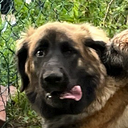
Today was one of those days when the world is a little bit quieter. It had snowed overnight, and in the morning, the soft, dense snow was still falling, swallowing everything: noises, hustle and bustle, even thoughts. When I set off with Ella, it was like walking through cotton wool. No cars, no voices, just the soft crunching under my shoes and the rhythmic panting of a happy dog.
And Ella? She was in her element.
Why Leonbergers love snow so much
Ella is a Leonberger. And if you saw her today, you would immediately understand why this breed particularly appreciates cold weather. Leonbergers were originally bred in the 19th century from Newfoundlands, St. Bernards, and Pyrenean Mountain Dogs, among others. Many of these ancestors come from regions with harsh climates.
A few interesting facts:
Double coat with undercoat: Leonbergers have a dense, water-repellent top coat and an insulating undercoat. This “natural thermal system” provides them with excellent protection against the cold.
Large body mass: Often weighing over 50 kg, they retain body heat much better than smaller dogs.
Working dog origins: They were bred for demanding tasks like pulling loads, rescue work in water, or guard duty in alpine regions.
No wonder Ella doesn't freeze in sub-zero temperatures, but actually thrives. While I trudged slowly through the snow, she galloped with an energy that I rarely see in summer. The snow stuck to her fur, but that seemed to motivate her rather than bother her.
Why dogs sniff more intensely in the snow
What struck me today was that Ella was sniffing like crazy. She examined every snowdrift and followed every trail. And there is actually a biological reason for this.
- Smells linger longer: Cold slows down chemical processes. Scent molecules decompose more slowly, which means scent trails stay “fresh” longer.
- Moisture intensifies scent: Snow contains water—and moisture binds scent particles better. This creates a more intense scent trail for a dog's sensitive nose.
- Clear “scent layers”: Freshly fallen snow preserves tracks almost like a snapshot. A fox that passed by an hour ago leaves behind a clearly traceable trail.
- Reduced background noise: Fewer people, fewer vehicles and therefore fewer competing smells.
Incidentally, dogs have up to 300 million olfactory cells, we humans have only about 5 to 6 million. In the snow, their already impressive perception is further enhanced.
The special silence
What made this walk so unique was the tranquility. Due to the constant snowfall, there were hardly any people out and about. No joggers, no cyclists, no children with sleds. Ella was able to run freely the whole time. She drew wide circles, dug her snout deep into the snow, and suddenly jumped up as if she had discovered an invisible treasure.
I stopped every now and then and just listened ... to nothing. This muffled winter silence is almost meditative. Even Ella seemed calmer in her movements, although she was full of energy.
When we returned, her fur was covered in little clumps of snow and her eyes were shining. There are days when a walk is just exercise and then there are days when you feel like you're part of a quiet, white world.
Today was definitely the latter. And for a Leonberger like Ella, there's probably nothing better than that.
This report was published via Actifit app (Android | iOS). Check out the original version here on actifit.io







2 comments
⚠️⚠️⚠️ ALERT ⚠️⚠️⚠️
HIVE coin is currently at a critically low liquidity. It is strongly suggested to withdraw your funds while you still can.
Congrats on providing Proof of Activity via your Actifit report!
You have been rewarded 59.0375 AFIT tokens for your effort in reaching 10664 activity, as well as your user rank and report quality!
You also received a 1.22% upvote via @actifit account.
Rewards Details
AFIT rewards and upvotes are based on your:
To improve your user rank, delegate more, pile up more AFIT and AFITX tokens, and post more.
To improve your post score, get to the max activity count, work on improving your post content, improve your user rank, engage with the community to get more upvotes and quality comments.
Chat with us on discord | Visit our website
Follow us on Twitter | Join us on Telegram
Download on playstore | Download on app store
Knowledge base:

FAQs | Whitepaper
How to signup | Maximize your rewards
Complete Actifit Tutorial
Support our efforts below by voting for: