ᅠ
I was then informed that there are three possible outcomes for the exhumation: 1) The remains are cremated and placed in columbariums—spaces in the cemetery used to store ashes after exhumation. 2) The remains are cremated and taken to the homes of the deceased’s family members (they do not remain in the cemetery). 3) The bones remain in the ground until they turn to dust—the grave is dug deeper to place the remains further down, with the possibility of using the space for another deceased person.

ᅠ
My mother was the first to know and the first to speak up. At the ripe old age of 87, and with all her lucidity, she explained to us: “From dust we came, and to dust we shall return. This is a biblical passage (Genesis 3:19) that your father often recalled. So, as far as I’m concerned, I choose the third option. The memorial lives in our memory; it doesn’t need to occupy physical space.” Both my sisters and I immediately agreed with those wise words from our matriarch. No one knew my father better than she did.


About the cemetery
ᅠ
It is adjacent to the Church of Santo António dos Olivais and the Monastery of Celas, the founding sites for the development of this urban parish of Coimbra, the second-largest parish by population outside the metropolitan areas of Lisbon and Porto.
It was part of the Franciscan convent complex, and in the 16th century, the convent buildings were expanded, occupying the area corresponding to the current churchyard and cemetery. At the time, it was common to have burial grounds adjacent to convents and churches, especially for members of the religious community and the local population.

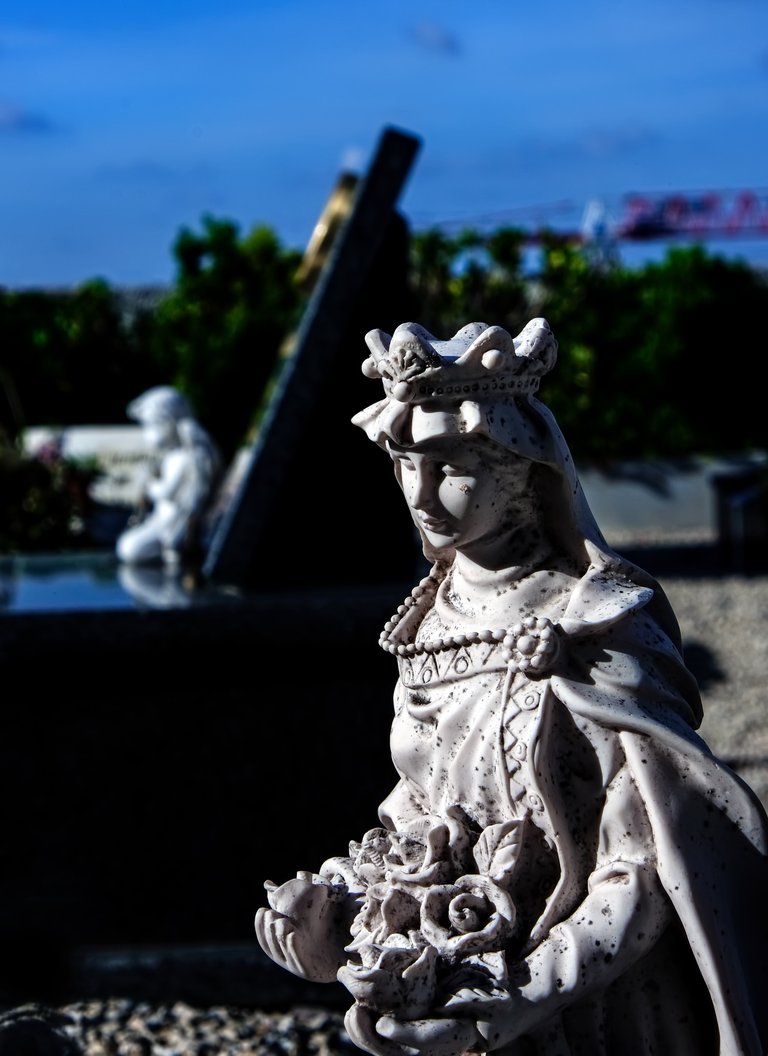
ᅠ
In the early 20th century, it was described as a “rustic village cemetery” because it was situated on high ground overlooking the valleys and fields of Coimbra—which have since been urbanized.


! [PORTUGUESE VERSION I CLICK HERE]
Cemitério de Santo António dos Olivais
Na passada terça-feira recebi um telefonema do cemitério a informar que passaram sete anos e é necessário tratar do processo exumação dos restos mortais do meu pai 8faleceu em 2019). A exumação é o procedimento de retirar os restos mortais da terra, após um período legal para libertar espaço. Neste cemitério são sete anos. E, por isso, desloquei-me à Junta de Freguesia para tratar do processo burocrático associado a esta etapa final. Fui despedir-me dos restos mortais do meu pai.
ᅠ
Fui então informado que a exumação tem três hipóteses: 1) As ossadas são cremadas e colocadas em cendrários - espaços no cemitério utilizados para depositar as cinzas após a exumação. 2) As ossadas são cremadas e levadas para casa dos familiares dos falecidos (não ficam no cemitério). 3) Os ossos continuam na terra até virarem pó - a campa é cavada com mais profundidade para colocar as ossadas mais fundo, com a possibilidade de aproveitar o espaço para outro defunto.
ᅠ
Depois de recolhidas as informações, fui fazer uma última visita ao cemitério e fiquei curioso sobre a escolha que a minha família iria fazer para a exumação dos restos mortais do meu pai. Normalmente estes assuntos não são de fácil resolução. Informei então a minha família mais direta (mãe e duas irmãs).
ᅠ
A minha mãe foi a primeira a saber e a primeira a opinar. Do alto dos seus 87 anos de idade, e com toda a sua lucidez, esclareceu-nos: “Do pó viemos ao pó voltaremos. Esta é uma passagem bíblica (Génesis 3:19) que o vosso pai lembrava muitas vezes. Por isso, por mim, escolho a terceira hipótese. O memorial habita na nossa memória, não precisa de ocupar espaços físicos.” Tanto eu como as minhas irmãs concordamos de imediato com aquelas palavras sábias da matriarca. Ninguém melhor que ela conhecia o meu pai.
Só no final da década de 1980 a cremação tornou-se uma opção nas cerimónias fúnebres em Portugal. Talvez pela novidade, o meu pai falava muito de querer ser cremado a quando a sua morte. Esse desejo durou pouco, foi até assistir a uma cremação nas cerimónias fúnebres de um vizinho. Pedia apenas que não fosse colocada uma pedra mármore em cima da sua campa. Cumprimos o desejo, substituímos com um tapete de relva artificial e com pouquíssimos adereços.
Sobre o cemitério
A última morada do meu saudoso pai foi o cemitério de Santo António dos Olivais, situado na freguesia com o mesmo nome, Coimbra (Portugal). A zona onde se situa o cemitério está associada ao Convento de Santo António dos Olivais, um local franciscano de relevante importância, onde Santo António de Pádua/Lisboa terá visitado e rezado no século XIII.
ᅠ
Está junto da Igreja de Santo António dos Olivais e Mosteiro de Celas, pontos de origem para o desenvolvimento desta freguesia urbana de Coimbra, a segunda maior freguesia com mais habitantes fora das áreas metropolitanas de Lisboa e do Porto. Fazia parte das instalações conventuais franciscanas e no século XVI as construções do convento foram ampliadas, ocupando a área correspondente ao atual adro e ao cemitério. Na época era comum haverem locais de sepultura junto aos conventos e igrejas, sobretudo para elementos da comunidade religiosa e população local.
ᅠ
Com o passar dos séculos, o espaço tornou-se centro religioso e de peregrinação, o que contribuiu para a preservação do cemitério enquanto lugar de sepultura para a população da freguesia. No início do século XX, era caracterizado como um “cemitério rústico de aldeia”, por estar situado num ponto alto com vista sobre vales e campos de Coimbra – hoje já urbanizados.